Auto Repair Shop Website: What Drivers Need to Know
Five questions drivers ask before booking an auto repair shop, what I found in 84 Google Maps listings, and a 15-minute check you can do on your phone.
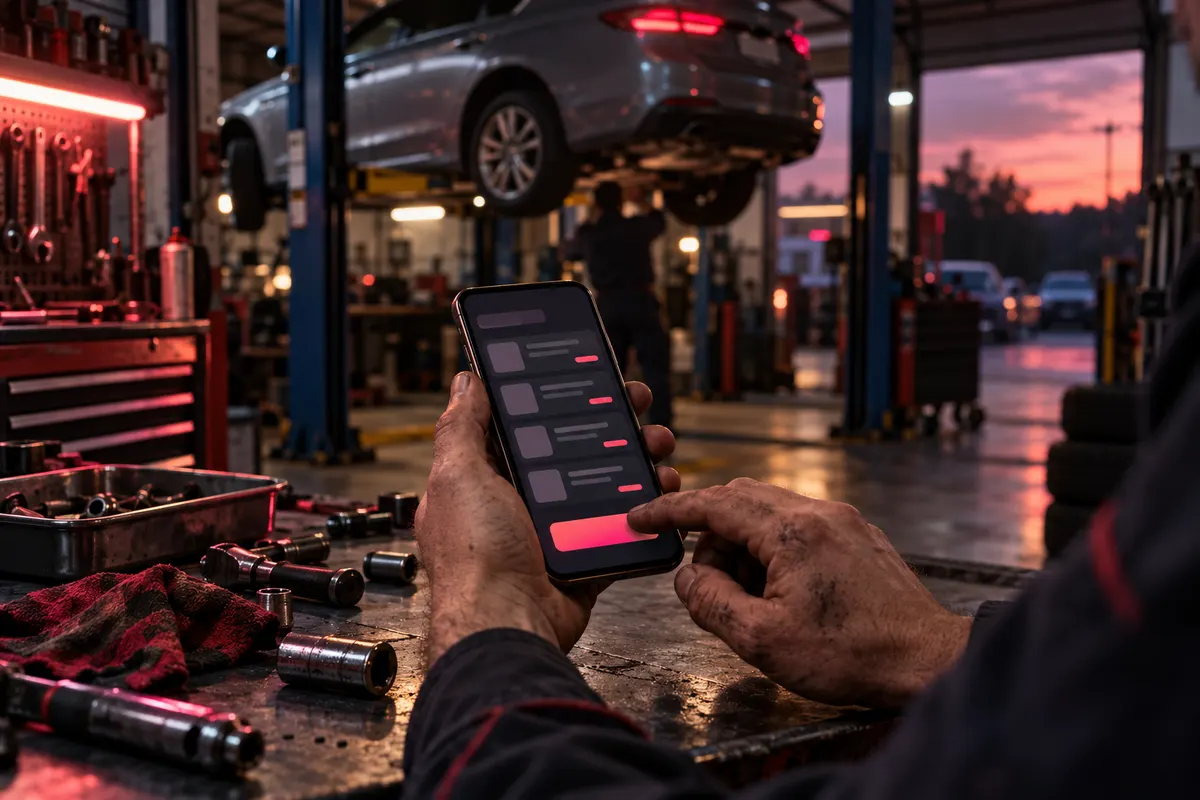
Before calling an auto repair shop, a driver wants to know five things: whether you work on their car, roughly what the job will cost, when they can come in, how to find the entrance, and what warranty you offer. Your website is useful when it answers those questions in a minute on a phone.
I reviewed 84 auto repair and tire shops listed on Google Maps in Ternopil, Ukraine, and nearby villages. Of those, 56 had no website link. None of the eight websites I could open showed a price for any job on the home page.
Here are the five questions, what customers can currently find, and how to check your own shop from a driver’s point of view in 15 minutes.
Five questions drivers ask when looking for an auto repair shop
Someone who needs new brake pads or wants a suspension noise checked will open several nearby listings and compare them. They want to know:
- Will you work on my car? Passenger car or truck, petrol or diesel, LPG or hybrid, and whether you service their make.
- Roughly how much will it cost? At least a starting price for common jobs.
- When can I come in? How to book, how long the repair might take, and where to wait.
- How do I find the entrance? Address, landmarks, opening hours, and where to leave the car.
- What warranty do you offer? Terms for the work and parts separately, including what happens if the customer brings their own parts.
Surveys from other markets point to similar concerns. In a 2024 US YouGov survey, 45% of car owners named a convenient location when choosing a repair shop, 44% considered reputation and reviews, 37% wanted transparent pricing, 33% asked about a warranty, and 20% looked for specialists in their car’s make. In Poland, 49% of drivers said choosing a repair shop was difficult. Their description of an ideal shop included a warranty and an estimated cost before work began (Kantar for Q Service Castrol, 2023). Another US finding: 79% of customers were more willing to visit a shop that could complete repairs the same day, while only 31% of shops managed that (Ratchet+Wrench, 2025).
Try writing down these five questions. Beside each one, note exactly where a customer can find the answer for your shop.
What customers see when they search for a repair shop
On October 6, 2026, I collected Google Maps listings for auto repair and tire shops in Ternopil, Ukraine, and nearby villages. I excluded dealerships, car washes, and parts stores. That left 84 shops. On October 27, I checked the websites linked from those listings.
| What I checked | Result |
|---|---|
| No “Website” link | 56 of 84 |
| Instagram, Facebook, or TikTok linked instead of a website | 15 |
| Link to the shop’s own website | 9 |
| Shops with 50+ reviews but no website, or a social profile in its place | 26 of 34 |
| Closed on Sunday (among 75 listings with opening hours) | 62 |
| No phone number / no opening hours | 9 / 9 |
| Listing not claimed by the owner | 13 |
| A price for a job in the home page text | 0 of 8 websites that opened |
The median was 34 reviews and a 4.5 rating. These shops have reviews, and most ratings are high. But someone looking for a mechanic for the first time sees a rating and address, then has to call to ask about the price.
Two details stood out. In one listing, the “Website” button led to a page that would not open. In another, a truck repair shop had put three phone numbers in plain text, without tap-to-call links. On some phones, a customer would have to copy the number manually. You can spot both problems in a minute by opening your listing as a customer would.
Find your shop in Google Maps on your phone and tap “Website”.
What to put in writing before a customer visits
A useful starting point is the information many shops already keep at the front desk: services and prices, parts options, warranty terms, opening hours, and contact details. Put it where someone can read it before deciding whether to call or visit.
Your website does not need a price for every possible repair. A list of common jobs with starting prices and an explanation of what can change the final cost gives drivers a useful guide. If you already have a price list and written warranty terms, you can start with those.
Two points deserve a clear explanation because customers often ask about them:
- Customer-supplied parts. Say whether you will fit them and what warranty, if any, applies to those parts and the work. Explain your terms before the customer arrives.
- Additional work. If you find another fault during a repair, tell the customer what it will cost and get their agreement before proceeding. A short statement about this addresses a common worry: “I came in for an oil change and got a bill for ten other jobs.”
| Information to prepare | How to show it online |
|---|---|
| Services, prices, and time needed | A table of 10-15 common jobs with starting prices and estimated times |
| Parts and materials | Where parts come from and whether customers can bring their own |
| Warranty terms | Separate terms for the work and for parts you supply |
| Opening hours and contact details | Hours for Saturday and Sunday, plus a number customers can tap to call |
| How to raise a concern | Who to contact and how if something goes wrong |
The simplest start is to publish the price list and warranty terms you already use.
Table: the driver’s question and your answer
| Question | What to show | A one-minute check |
|---|---|---|
| Will you work on my car? | The types of vehicles you service and any you do not, including trucks, LPG vehicles, hybrids, and specific makes | Can someone tell from the first screen or services page? |
| How much will it cost? | Starting prices for your 10-15 most common jobs and what affects the final price | Can someone find the price of a brake pad replacement in two taps? |
| When can I come in? | How to book, how long common jobs take, and where to wait | Is there a booking button or a form for choosing a day? |
| Where is the entrance? | Address, landmark, entrance photo, map, and opening hours | Can someone start directions with one tap? |
| What is the warranty? | Terms for the work, supplied parts, and customer-supplied parts | Is the warranty period easy to find? |
Word starting prices so they give guidance without promising a fixed bill. For example: “Front brake pad replacement: from [your price], 40-60 minutes. The final price depends on the model. We’ll confirm the cost after inspection. If we find another problem, we’ll call you and only do extra work with your approval.” Replace the placeholder with your own price. The customer gets a price guide, an estimated time, and a clear explanation of what happens next.
Fill in this table for your shop. A row you cannot complete may point to a question customers currently have to call and ask.
Sundays and evenings: taking enquiries when the shop is closed
In the Ternopil review, 62 of the 75 shops that listed their hours were closed on Sunday. A driver whose “Check Engine” light comes on or whose car starts knocking that day may look for a shop straight away. If calling is the only way to get in touch, they may choose a shop where they can leave an enquiry instead.
A form can collect the basics in four fields: car make and year, what happened, a convenient time to come in, and phone number. The enquiry can go to a messenger app, ready for someone to respond on Monday morning. The article on a Telegram booking bot explains how messenger booking works and what to prepare before using it.
Check whether someone can find your shop and leave an enquiry at 8 p.m. on a Sunday.
What suits your shop
- One or two mechanics with a full schedule: A website can wait. Claim your Google Maps listing and add your hours, a photo of the entrance, and a few prices in the description.
- An Instagram link in your listing: Add prices for common jobs and your hours to your profile. Once you have your own page, link to it from the listing.
- A narrow specialty, such as LPG, automatic transmissions, steering racks, or trucks: Give each service its own page with a starting price. People often search for these jobs together with a city name, so a specific page may help them more than a general home page.
- An existing website: Start with the table above and make the phone number at the top tap-to-call.
- Several repair bays or locations: Show each address with its own hours and directions, consistently on your website and in its Google listing.
A 15-minute check on your phone
Take your phone, turn off Wi-Fi, and follow the customer’s path:
- Search Google for “auto repair [your area or street]” and find your shop.
- Tap “Website”. Does the page open quickly?
- Can you tell within 10 seconds which vehicles you repair?
- Find the price of one common job. How many taps did it take?
- Tap the phone number. Does it start a call?
- Find “warranty”. Is the period stated?
- Try to leave an enquiry as though it were Sunday at 8 p.m.
Wherever you stop or hesitate, a customer may do the same. They have less reason to keep looking for the answer.
Common questions
Why does an auto repair shop need a website if it has a Google Maps listing?
A listing gives people your address, rating, and phone number, but has limited room for prices, vehicle types, and warranty terms. If you have enough customers and your schedule is full, a detailed listing with good photos may be enough. If you want more new customers, your own page can answer questions they currently have to ask by phone.
Should I show prices if they depend on the car?
Yes. Use starting prices and explain what affects the final cost. Drivers understand that you will confirm a precise price after inspection. They still want a rough figure to compare shops.
How many pages does an auto repair shop website need?
One page with services, prices, warranty terms, contact details, and a form is enough to start. Add separate pages for the services that bring in the most work, such as automatic transmission repair or LPG installation.
What should I say about parts customers bring themselves?
State whether you accept them and explain what warranty terms apply to the parts and your work. Customers should know before they arrive.
How can I take bookings when nobody can answer the phone?
A four-field form or a messenger bot can collect enquiries while the shop is closed. Someone still needs to reply when the shop opens. Otherwise, the driver may book elsewhere.
Where to start today
Fill in the “driver’s question and your answer” table for your shop, then do the phone check. You can address many gaps with information you already have: your front desk price list, warranty terms, and opening hours. If you are unsure whether Google can find your pages, start by checking what Google knows about your website.
Sources
- YouGov, 2024: where US car owners get their vehicles serviced and what affects their choice
- Motofaktor, 2023: Q Service Castrol and Kantar Polska report on choosing a repair shop
- Ratchet+Wrench, 2025: survey of repair shop owners and customers (PDF)
- My review of 84 Google Maps listings for auto repair and tire shops in Ternopil, Ukraine, and nearby villages (October 6, 2026), followed by a check of the linked websites (October 27, 2026)
Wondering what is wrong with your website?
Send me the link and I will tell you for free what stops it from bringing enquiries.